



 Previous Article
Next Article

 Previous Article
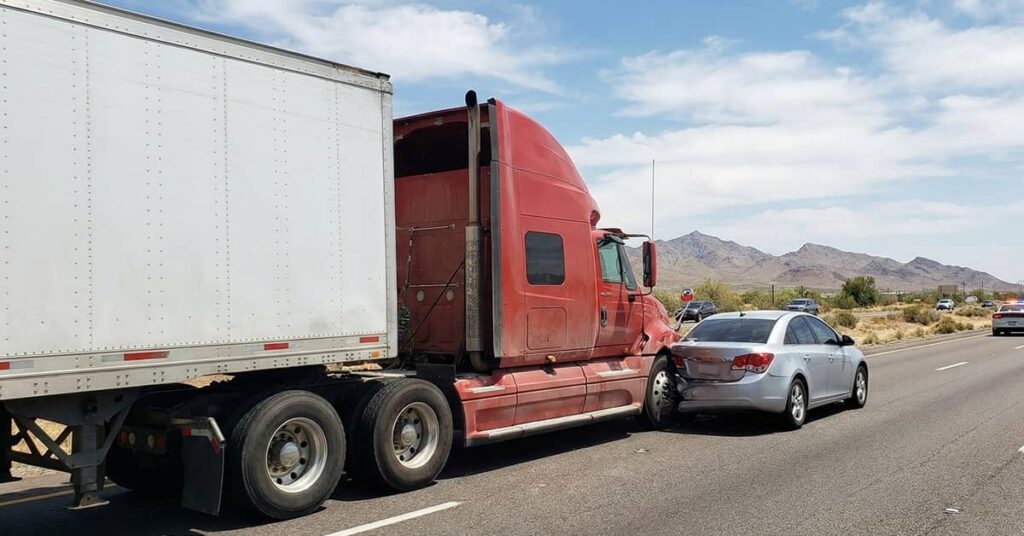


A rear-end collision is the most common type of auto accident. Some of these crashes are minor fender benders, while others can result in catastrophic injuries and damages. Rear-end truck accidents in Arizona are more likely to be in the second category.
Commercial trucks are much bigger and much heavier than other vehicles on the road. The difference in size and weight increase the likelihood that a crash with another vehicle will be serious. Phoenix truck accident lawyers at Burg Simpson can help you hold the negligent truck driver and other parties accountable.
In most cases, the driver in the rear receives the blame for a rear-end collision. Unfortunately, trucking companies and insurers often dispute claims, turning a seemingly straightforward case into a pitched legal battle.
Rear-end truck accidents in Arizona require experienced legal representation. Call Burg Simpson at 602-777-7000 today for a FREE case review. We serve clients in Phoenix and all of Arizona.
A rear-end truck accident occurs when the front of a semi-truck crashes into the back of another vehicle. Multiple factors determine the severity of these collisions. These include the speed at which the truck was traveling, how much weight the semi is carrying, and the size of the vehicle in front.
People may also describe a crash where a passenger vehicle strikes the back of a truck as a “rear-end truck accident.” The truck may suffer little to no damage in such a wreck, while the driver of the car may be seriously injured.
Most rear-end accidents are avoidable. Truck drivers should keep a safe following distance, drive the speed limit, and adjust for conditions. Unfortunately, truck drivers may neglect these duties for a variety of reasons.
The potential causes of rear-end collisions include:
It is vital to investigate rear-end collisions soon after they happen. This allows for the prompt collection of evidence, ensures that witnesses’ memories are still fresh, and provides the greatest likelihood of identifying the cause — and who is responsible.
The general rule of thumb is that a driver who hits another vehicle from behind is at fault. Arizona Revised Statutes § 28-730 states that motorists must maintain a distance that is “reasonable and prudent” based on speed and driving conditions.
However, fault can be a complex issue in truck accident claims, even in something as seemingly straightforward as a rear-end collision. Multiple parties may be at fault, including:
The driver in front may also share some of the blame, such as if they stop suddenly or fail to check their blind spots before changing lanes. Fortunately, Arizona’s comparative negligence law generally allows you to recover some compensation even if you are partly at fault for the truck accident.
Arizona has a pure comparative negligence system. It permits recovery of damages even when the claimant is partially at fault, though compensation is reduced in proportion to the degree of fault (see Arizona Revised Statutes § 12-2505).
Determinations of fault are based on the evidence. The police and insurance companies will conduct investigations, but their conclusions may differ from your experience and even undermine your claim. It is in your best interest to have a rear-end truck accident lawyer in Arizona represent you.
One of the first things a skilled attorney will do is investigate and collect evidence. Evidence that can help to establish fault if a big rig truck rear ends you includes:
Fault is often hotly disputed in trucking accident claims. Insurers want to avoid liability so they are not on the hook for large payouts. An experienced lawyer will gather evidence to ensure that fault is assigned properly.
The truck driver may be issued a ticket if law enforcement finds evidence of a traffic violation. If federal safety regulations were violated, the Federal Motor Carrier Safety Administration (FMCSA) may open an investigation and issue fines against the truck driver and trucking company.
People often believe that the driver in the rear may not be held liable if no traffic ticket was issued. This is not the case. A driver does not have to violate traffic laws to be held responsible for an accident they cause. You need to prove negligence on the part of the defendant(s), not that any laws were broken.
There are several steps you should take after being rear-ended by a semi-truck. By doing the following, you can protect yourself both physically and legally:
Once you have legal counsel, you can focus on recovering from your injuries. Your lawyer can investigate the rear-end crash, identify the at-fault parties, calculate the damages you are due, and prepare a strong case on your behalf.
Rear-end collisions are extremely common. You may be entitled to compensation if you or someone you love was rear-ended by a car or truck. Burg Simpson can explore your rights and help you take legal action.
For a FREE case evaluation, call 602-777-7000 today. Our rear-end truck accident attorneys are based in Phoenix and serve clients throughout Arizona.